The White Rose organisation was a group of students at Munich University who were opposed to Hitler and the Nazi Regime. Sophie Scholl, and her brother, Hans Scholl, are the two best known members of the organisation. The White Rose and members such as Sophie Scholl distributed leaflets, painted anti-Nazi graffiti and promoted passive resistance to the Nazi State.
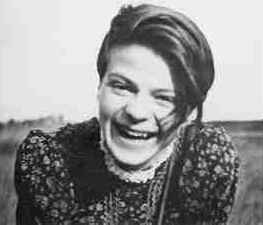
Sophie Scholl
Sophie Scholl enrolled at the University of Munich in May 1942, following her National Service. Here she was introduced to the friends of her brother, Hans Scholl. This group of friends had a shared interest in culture and philosophy. It was the latter of these that led Sophie Scholl and her friends to discuss issues such as the role of the Individual within a totalitarian state.
The White Rose Movement
These informal discussions soon led to a more organised opposition to the regime. Several members of the group were sent to the Eastern Front for a 3 month posting (this was commonplace for medical students during the war). They saw the conditions on the Eastern Front at first hand, witnessed atrocities against Soviet Forces and were eyewitnesses to the way in which the Jews of Eastern Europe were being treated in the summer of 1942.
These experiences, along with German reversals on the Eastern Front and an increase in rumours about the whereabouts of the Jews led to the group making the decision to act. This decision saw the forming of the White Rose movement. In a Police State doing anything ‘against’ the state was dangerous, yet this group were willing to take the risk and publicise what they had learnt.
Sophie Scholl and the distribution of anti-Nazi leaflets
The White Rose movement distributed 6 leaflets in and around the campus of Munich University. They were aided by some members of staff who sympathised with their views.
Excerpt from the first White Rose leaflet:
Isn’t it true that every honest German is ashamed of his government these days? Who among us has any conception of the dimensions of shame that will befall us and our children when one day the veil has fallen from our eyes and the most horrible of crimes– crimes that infinitely outdistance every human measure– reach the light of day?
Each of the leaflets produced by the White Rose was tantamount to Treason. Knowing this, the leaflets were dropped at places such as phone boxes, or left in bars or cafes.
Investigation by the Gestapo
The fifth leaflet produced by the White Rose provoked a serious response from the Gestapo and the state authorities. It called for active resistance against the regime and openly opposed Hitler and the ‘criminal’ dictator state.
Sophie Scholl and her brother, Hans, arrested for treason
Following the news of the German Army’s defeat at Stalingrad the White Rose movement created a 6th, and final, leaflet. Again it called for action against the state. Whilst distributing the leaflet in the University on 18 February 1943, Sophie and Hans Scholl were seen throwing leaflets into the air by one of the caretaking staff. Soon afterwards Sophie and Hans Scholl were arrested. They were interrogated by the Gestapo before being tried for Treason on 22 November 1943. Both were found guilty of treason and sentenced to death. The sentence was carried out the same day, at 5pm in the prison in which they had been held.
Fate of members of the White Rose Movement
Despite the best efforts of Sophie Scholl to hide the identities of other members of the White Rose movement, the Gestapo were able to round up and arrest the majority of leading members of the group. Over the course of the rest of the war numerous members of the White Rose were put on trial. They’re sentences ranged from execution to prison sentences. Several members survived the war, in large because trial dates had to be changed due to Allied Bombing raids.
Links
Museum of Jewish Heritage – Remembering Resistance: Sophie Scholl and the White Rose
Germany 1919 – 1945 Links
The Second Reich
Unification of Germany – Political systems within the Second Reich – German Society during the Second Reich – Collapse of the Second Reich
Weimar Republic
Interim Government – Founding of the Weimar Republic – Impact of the First World War on Germany – The Treaty of Versailles and its impact on Germany – Weimar Constitution – 1919-1923: Years of Crisis? – Spartacist Uprising – Kapp Putsch – Reichsbanner Schwarz-Rot-Gold – Reparations – Hyperinflation in Germany, 1923 – 1924-1928: A Golden Era? – 1925 Presidential Election – Gustav Stresemann – German Foreign Relations 1919-1932 – Germany in the Great Depression – Failings of the Weimar Republic – Dada Movement
Rise of the Nazi Party
The Munich Putsch – Did the Economic Crisis of 1923 help the Nazi’s? – Origins of the Nazi Party – Rise of the Nazi Party
Nazi Germany
Totalitarian Regime in Nazi Germany – How did Hitler consolidate power? – Mein Kampf – Nazi methods of control – Opposition to the Nazi Regime – Organisation of the Nazi Party – Fuhrerprinzip – Kristallnacht – Youth and Education – Goering and the 2nd 4 Year Plan – Anti-Jewish Boycott, 1933 – Nazi Anti-Semitism – DAF (The German Labour Front) – Propaganda in Germany 1919-39 – Economic Policy of the Nazi Party – Kreisau Circle – The Confessing Church – Catholic Church – Edelweiss Pirates
Biographies
Ludwig Beck – Dietrich Bonhoeffer – Bishop Clemens von Galen – Carl Goerdeler – Robert Ley – Helmuth von Moltke – Martin Niemoller – Erwin Rommel – Hjalmar Schacht – Sophie Scholl – Albert Speer – Claus von Stauffenberg – Fritz Todt