Erwin Rommel’s role in the July Bomb Plot has been much debated by historians. Rommel was implicated in the July Plot and offered a choice of suicide, and an honourable death, or facing the People’s Court; which would have resulted in almost certain execution for himself, his family and his aides. Rommel chose suicide and the promise of safety for his family.
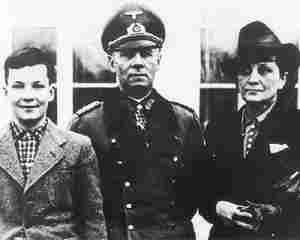
The extent to which Rommel was active in plots against Hitler is an area in which there are some uncertainties.
Rommel and opposition
Evidence that suggests that Rommel was a participant in plots against Hitler and the leadership of the Third Reich:
Mentioned in letters and interrogations
Rommel was cited as a possible successor to Hitler, and mentioned as someone worthy of holding positions of high rank and status in a post-Hitler Germany. Goerdler mentioned Rommel in such a way in letters. His name was also mentioned during the interrogations of Stülpnage and von Hofacker.
Rommel being mentioned does not necessarily mean that he was an active (or even non passive) participant in any plot. The latter two examples are both from the interrogation room. People in that situation often say things that are not true, or exaggerate things for their own good. Goerdler’s references are certainly worthy of investigation.
Rommel’s complaints
Nazi Officials in occupied France stated that Rommel frequently complained about Nazi crimes and incompetence.
This could mean all manner of things. He may well have complained. His complaints may have meant that he disliked the leadership, though just as likely, that he was frustrated at not being able to get on with his job as a professional soldier.
There are numerous references to Rommel’s knowledge of the plot in academic books and in interviews conducted after the war.
Historical opinion
These provide examples of Goerdler making offers to Rommel; of Rommel being made fully aware of the aims of the plot and asked for his opinion about the plot and the way in which a post-regime Germany ought to be run. This section of the Wikipedia entry about Goerdler refers to Rommel on a number of occasions. There are references for many of the statements to substantiate the claims.
Online Sources used whilst preparing this article include:
Germany 1919 – 1945 Links
The Second Reich
Unification of Germany – Political systems within the Second Reich – German Society during the Second Reich – Collapse of the Second Reich
Weimar Republic
Interim Government – Founding of the Weimar Republic – Impact of the First World War on Germany – The Treaty of Versailles and its impact on Germany – Weimar Constitution – 1919-1923: Years of Crisis? – Spartacist Uprising – Kapp Putsch – Reichsbanner Schwarz-Rot-Gold – Reparations – Hyperinflation in Germany, 1923 – 1924-1928: A Golden Era? – 1925 Presidential Election – Gustav Stresemann – German Foreign Relations 1919-1932 – Germany in the Great Depression – Failings of the Weimar Republic – Dada Movement
Rise of the Nazi Party
The Munich Putsch – Did the Economic Crisis of 1923 help the Nazi’s? – Origins of the Nazi Party – Rise of the Nazi Party
Nazi Germany
Totalitarian Regime in Nazi Germany – How did Hitler consolidate power? – Mein Kampf – Nazi methods of control – Opposition to the Nazi Regime – Organisation of the Nazi Party – Fuhrerprinzip – Kristallnacht – Youth and Education – Goering and the 2nd 4 Year Plan – Anti-Jewish Boycott, 1933 – Nazi Anti-Semitism – DAF (The German Labour Front) – Propaganda in Germany 1919-39 – Economic Policy of the Nazi Party – Kreisau Circle – The Confessing Church – Catholic Church – Edelweiss Pirates
Biographies
Ludwig Beck – Dietrich Bonhoeffer – Bishop Clemens von Galen – Carl Goerdeler – Robert Ley – Helmuth von Moltke – Martin Niemoller – Erwin Rommel – Hjalmar Schacht – Sophie Scholl – Albert Speer – Claus von Stauffenberg – Fritz Todt