The Luddite protest is an example of people opposing the use of new technologies. Croppers, men who worked cloth and were highly skilled, began to be made redundant because of the introduction of new frames in the mills. These frames could be operated manually by an unskilled worker and production was much higher than it had previously been. Annoyed at their rapid loss of status and relative wealth, the Croppers soon became Luddite protesters.
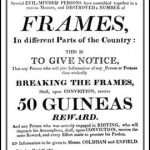
The Luddites
Enraged by the mill owners lack of sympathy for their cause a group of croppers marched on mills in Nottingham, intent on wrecking the frames responsible for their predicament. Soon this method of venting their disapproval had spread into the Northern mill towns and Manchester, Leeds and Bradford found themselves hosting sometimes bloody conflicts between mill owners and the ‘Luddites’.
Such was the disruption caused by the Luddites that the Prime Minister, Stanley Perceval, saw fit to introduce the ‘Frame breaking Act.’ This Act of Parliament outlawed the vigilante tactics of the Luddites and imposed the death penalty on any man found guilty of smashing a frame. The croppers, led by the mythical general, ‘Ned Ludd’, took little notice. Still they sent threats to the mill owners and still they continued to attack mills.
Perhaps in desperation the government then initiated further legislation, known now as the ‘Six Acts’.
The Luddite movement was considered quite dangerous. It threatened to destablise the economy in many towns. The owners of woolen mills lived in fear. The Government had been forced to call upon the army to intervene. The inventions that led to the transformation of the woolen trade had a huge impact on the lives of many people. Predominantly in the Northern towns and cities, there was a rapid change in the way that work was done. Cottage Industry was replaced with mechanisation.
Industrial Revolution
Before the Industrial Revolution – Famous Factories – Women and Children during the Industrial Revolution – Migration – Inventions and Inventors – The Workhouse – Life in an Industrial Town – Industrialists and Philanthropists – Railways and Canals – Housing in the Industrial Revolution – Working Conditions – Disease in the Industrial Revolution – Chartists and the Peoples Charter – Luddites – Swing Riots – Rebecca Riots – Protests, Riots and Conspiracies of the Industrial Age – Public Health in the Industrial Revolution